Summary
In 2008, central banks, led by the Federal Reserve, rode to the rescue of the global financial system.
Seven years on and trillions of dollars later they no longer have the answers and may even represent a major risk for the global economy.
Are central banks out of options? Are they able to save the world during the next downturn?
David Chance of Reuters reports the central bank cavalry can no longer save the world:
In 2008 central banks, led by the Federal Reserve, rode to the rescue of the global financial system. Seven years on and trillions of dollars later they no longer have the answers and may even represent a major risk for the global economy.
A report by the Group of Thirty, an international body led by former European Central Bank chief Jean-Claude Trichet, warned on Saturday that zero rates and money printing were not sufficient to revive economic growth and risked becoming semi-permanent measures.
“Central banks have described their actions as ‘buying time’ for governments to finally resolve the crisis… But time is wearing on, and [bond] purchases have had their price,” the report said.
In the United States, the Federal Reserve ended its bond purchase program in 2014, and had been expected to raise interest rates from zero as early as June 2015.
But it may struggle to implement its first hike in almost 10 years by the end of the year. Market pricing in interest rate futures puts a hike in March 2016.
The Bank of England has also delayed, while the European Central Bank looks set to implement another round of quantitative easing, as does the Bank of Japan which has been stuck in some form of quantitative easing since 2001.
Reuters calculates that central banks in those four countries alone have spent around $ 7 trillion in bond purchases.
The flow of easy money has inflated asset prices like stocks and housing in many countries even as they failed to stimulate economic growth. With growth estimates trending lower and easy money increasing company leverage, the specter of a debt trap is now haunting advanced economies, the Group of Thirty said.
Mr. Trichet is right, zero rates and money printing are not sufficient to revive economic growth and risk becoming semi-permanent measures.
On this last point, Andrew Mayeda of Bloomberg reports, in Slow-Gear World Economy Vexes Officials at Fed, China Crossroads:
Global policy makers used nearly all their tools to get the world economy out of a stall six years ago. What’s vexing them now is how to shift into higher gear.
The prospect of the world’s biggest economy being healthy enough for its central bank to raise interest rates for the first time in nearly a decade would usually be reason to cheer. So might efforts by the next-largest to move toward more balanced growth.
A sluggish and uneven global recovery is making these turning points — the Federal Reserve’s plan to raise rates and a slowing of China’s once high-flying economy — harder to digest for central bankers and finance chiefs who met over the weekend in Lima. Clouding the picture is lackluster investment from companies sitting on cash, still too reluctant to deploy the capital that typically drives recoveries.
“The world is not in crisis, but there’s a great sense of unease, and that sense of unease explains why globally, almost everywhere, private investment is much weaker than you would expect at this stage in the cycle,” Singapore Deputy Prime Minister Tharman Shanmugaratnam said in the Peruvian capital at the International Monetary Fund’s annual meeting, which wrapped up Sunday.
…Willem Buiter, chief economist for Citigroup, is predicting a global recession will start in 2016, led by China.
The IMF left its forecast for China’s growth at 6.8 percent this year and 6.3 percent in 2016. Still, the fund warned the “cross-border repercussions” of slowing Chinese growth “appear greater than previously envisaged.”
“I’m getting to the point where I don’t see concerns about China going away — maybe ever,” said David Fernandez, head of fixed-income research for the Asia-Pacific at Barclays Bank PLC.
To be sure, the Fed’s move to tighten monetary policy and China’s shift to more consumption-driven growth may turn out to be welcome developments, Brazilian Finance Minister Joaquim Levy said.
Turning Optimistic
“My impression of the discussions is that they started with a somewhat gloomy mood, but people have realized that the risks we’re facing are somewhat positive problems,” because they point to “most economies moving away from the old problems and starting a new phase,” he said.
Fed Vice Chairman Stanley Fischer said Sunday the U.S. economy may be strong enough to merit an interest-rate increase by year end, while cautioning that policy makers are monitoring slower domestic job growth and international developments. “We remain committed to communicating our intentions as clearly as possible — but not more clearly than the facts warrant,” he said.
With all due respect to Stanley Fisher, raising rates any time soon would be a monumental mistake, especially after China’s Big Bang.
In fact, speaking at a panel at the International Monetary Fund conference in Lima, Bank of England Deputy Governor Minouche Shafik said it was preferable to use macro prudential tools rather than monetary policy when targeting global financial risks, stating major central banks should not raise rates to discourage monetary policy.
She is right, with global deflation spreading, we are witnessing a sea change at the Fed and will likely see more unconventional monetary measures in the future to revive the global economy.
Interestingly, while Ray Dalio is worried about the next downturn, the Fed and other central banks have many tricks up their sleeve to deal with such a scenario. One of these is more quantitative easing, which seems to be working better than expected in Europe, and the other is what Greg Robb of The Wall Street Journal just reported on, namely, the deployment of negative interest rates if another crisis erupts:
Federal Reserve officials now seem open to deploying negative interest rates to combat the next serious recession even though they rejected that option during the darkest days of the financial crisis in 2009 and 2010.
“Some of the experiences [in Europe] suggest maybe can we use negative interest rates and the costs aren’t as great as you anticipate,” said William Dudley, the president of the New York Fed, in an interview on CNBC on Friday.
The Fed under former chairman Ben Bernanke considered using negative rates during the financial crisis, but rejected the idea.
“We decided – even during the period where the economy was doing the poorest and we were pretty far from our objectives – not to move to negative interest rates because of some concern that the costs might outweigh the benefits,” said Dudley.
Bernanke told Bloomberg Radio last week he didn’t deploy negative rates because he was “afraid” zero interest rates would have adverse effects on money markets funds — a concern they wouldn’t be able to recover management fees — and the federal-funds market might not work. Staff work told him the benefits were not great.
But events in Europe over the past few years have changed his mind. In Europe, the European Central Bank, the Swiss National Bank and the central banks of Denmark and Sweden have deployed negative rates to some small degree.
“We see now in the past few years that it has been made to work in some European countries,” he said.
“So I would think that in a future episode that the Fed would consider it,” he said. He said it wouldn’t be a “panacea,” but it would be additional support.
In fact, Narayana Kocherlakota, the dovish president of the Minneapolis Fed, projected negative rates in his latest forecast of the path of interest rates released last month.
Kocherlakota said he was willing to push rates down to give a boost to the labor market, which he said has stagnated after a strong 2014.
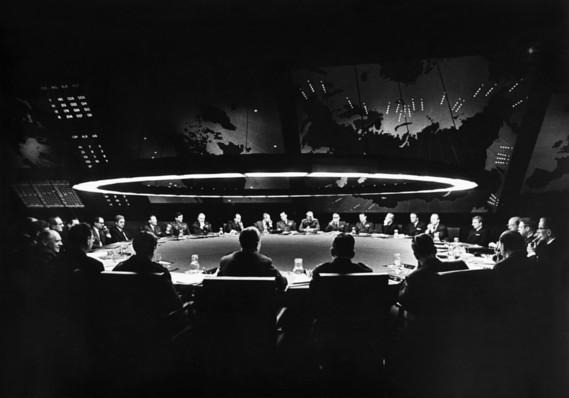
Although negative rates have a “Dr. Strangelove” feel, pushing rates into negative territory works in many ways just like a regular decline in interest rates that we’re all used to, said Miles Kimball, an economics professor at the University of Michigan and an advocate of negative rates.
But to get a big impact of negative rates, a country would have to cut rates on paper currency, he pointed out, and this would take some getting used to.
For instance, $ 100 in the bank would be worth only $ 98 after a certain period.
Because of this controversial feature, the Fed is not likely to be the first country that tries negative rates in a major way, Kimball said.
But the benefits are tantalizing, especially given the low productivity growth path facing the U.S.
With negative rates, “aggregate demand is no longer scarce,” Kimball said.
Are we headed for negative rates in the U.S.? That all depends on inflation expectations and whether deflation spreads to America. For now, everything seems quiet as investors bet big on a global recovery, but that can all change quickly especially if get another stock rally-to-rout in China at the same time the Fed starts lifting rates.
Below, Teis Knuthsen, CIO at Saxo Private Bank, says monetary policy cannot be expected to raise inflation. Listen to his comments, very interesting as he thinks QE has no impact on inflation and may even be deflationary. He also thinks monetary policy is ineffective but makes no mention of negative rates as a potential monetary tool.
And while Knuthsen isn’t worried about China, the wider-than-expected plunge in China’s September imports is “very bad news” for emerging markets, says Callum Henderson, global head of FX research at Standard Chartered.
We’ll see if this trend continues but one thing is for sure, take all this talk of central banks running out of options with a shaker of salt. That is total rubbish!


No comments:
Post a Comment